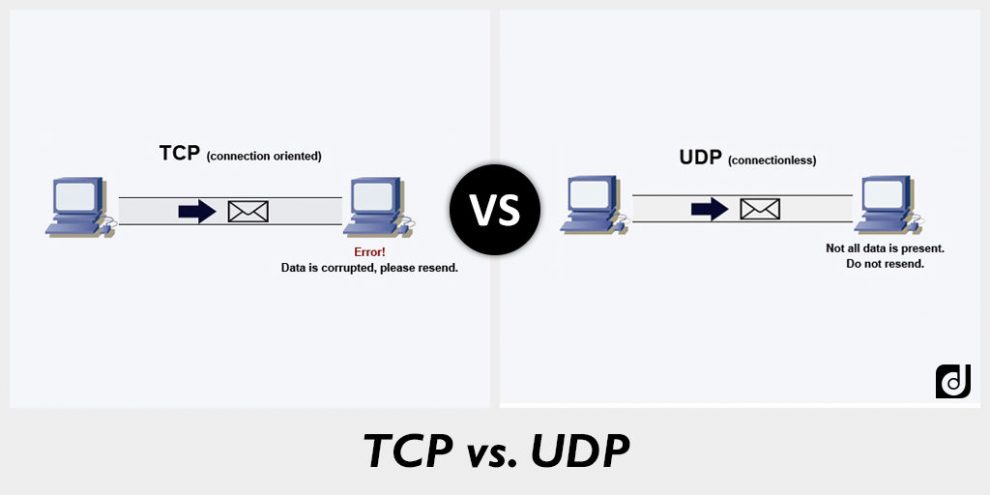
User Datagram Protocol (UDP) is an alternative communications protocol to Transmission Control Protocol (TCP), used primarily for starting low-latency and loss-tolerating connections between applications and the internet. UDP is also known as a “stateless” protocol, meaning it doesn’t acknowledge that the packets being sent have been received. Due to UDP working this way, it is typically used for streaming services. You may hear some break up in the audio or see some skips in the video, but UDP transmissions prevents the stream from stopping completely.
Transmission Control Protocol (TCP) is a standard that defines how to establish and maintain a network conversation through which programs can exchange information or data. TCP works with the Internet Protocol (IP), which defines how computers send packets of information to each other. TCP is widely used for its reliability, ordered nature, and error correction. TCP is used for a variety of things, like email, file transfers, and any other operations where error-free data is more important than pure speed.
Related Terms: Transmission Control Protocol (TCP), Internet Control Message Protocol (ICMP)
Sources: TechTarget, TechTerms, PingPlotter
Discover and share the latest cybersecurity trends, tips and best practices – alongside new threats to watch out for.

Severity: CRITICAL (CVSS 9.2) | Issued: October 22, 2026 On October 21, two critical flaws in PHP,...
Read more
Author: Katie Boquetti | Editorial: Craig Taylor Editorial by Craig Taylor: Even before Claude Code made...
Read more
Author: Katie Boquetti | Editorial: Craig Taylor Editorial by Craig Taylor: We've known for a while here...
Read moreGet sharper eyes on human risks, with the positive approach that beats traditional phish testing.