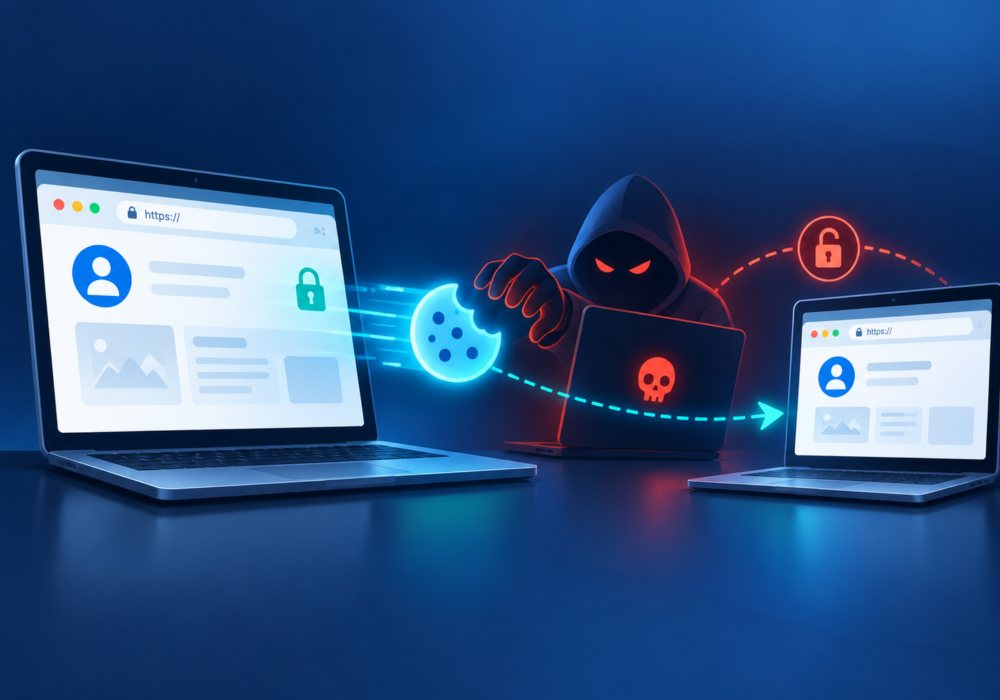
Session cookie theft occurs when an attacker steals a browser cookie that is being used to maintain an authenticated session with a website or online service.
After a user successfully signs in, many websites place a session cookie in the browser. The cookie allows the website to recognize the user as they navigate the site without requiring them to repeatedly enter their username, password, and MFA code.
If an attacker obtains a valid session cookie and successfully reuses it, the service may treat the attacker as the already-authenticated user.
This can make session cookie theft particularly dangerous because some attacks can occur after MFA has already been completed.
Attackers may attempt to steal session cookies using:
MITRE ATT&CK specifically documents stealing web session cookies as a credential-access technique because they can be used to access online services as an authenticated user.
SMBs should not assume that MFA makes an account impossible to compromise.
MFA remains extremely important, but attackers increasingly target what happens after authentication. Protecting browsers and devices is therefore a critical part of protecting cloud accounts.
Businesses should:
MSPs should understand session cookie theft because compromised cloud identities are common targets during business email compromise and other identity-based attacks.
When responding to a suspicious Microsoft 365, Google Workspace, or SaaS account, changing the password should not automatically be considered the end of remediation.
Technicians should evaluate active sessions, authentication tokens, sign-in activity, devices, MFA methods, and suspicious application access.
A session cookie can function like a temporary proof that a user has already logged in.
If an attacker steals that proof, they may not need the victim’s password again. Strong endpoint security, modern authentication, and effective session revocation are all important defenses.
Additional Reading:
CyberHoot does have some other resources available for your use. Below are links to all of our resources, feel free to check them out whenever you like:
Discover and share the latest cybersecurity trends, tips and best practices – alongside new threats to watch out for.
Author: Katie Boquetti | Editorial: Craig Taylor Editorial by Craig Taylor: For years we've trained...
Read more
Most phishing tests lie to your employees. This one says hello first! HootPhish tells people up front: this is...
Read more
Severity: CRITICAL (CVSS 9.2) | Issued: October 22, 2026 On October 21, two critical flaws in PHP,...
Read moreGet sharper eyes on human risks, with the positive approach that beats traditional phish testing.