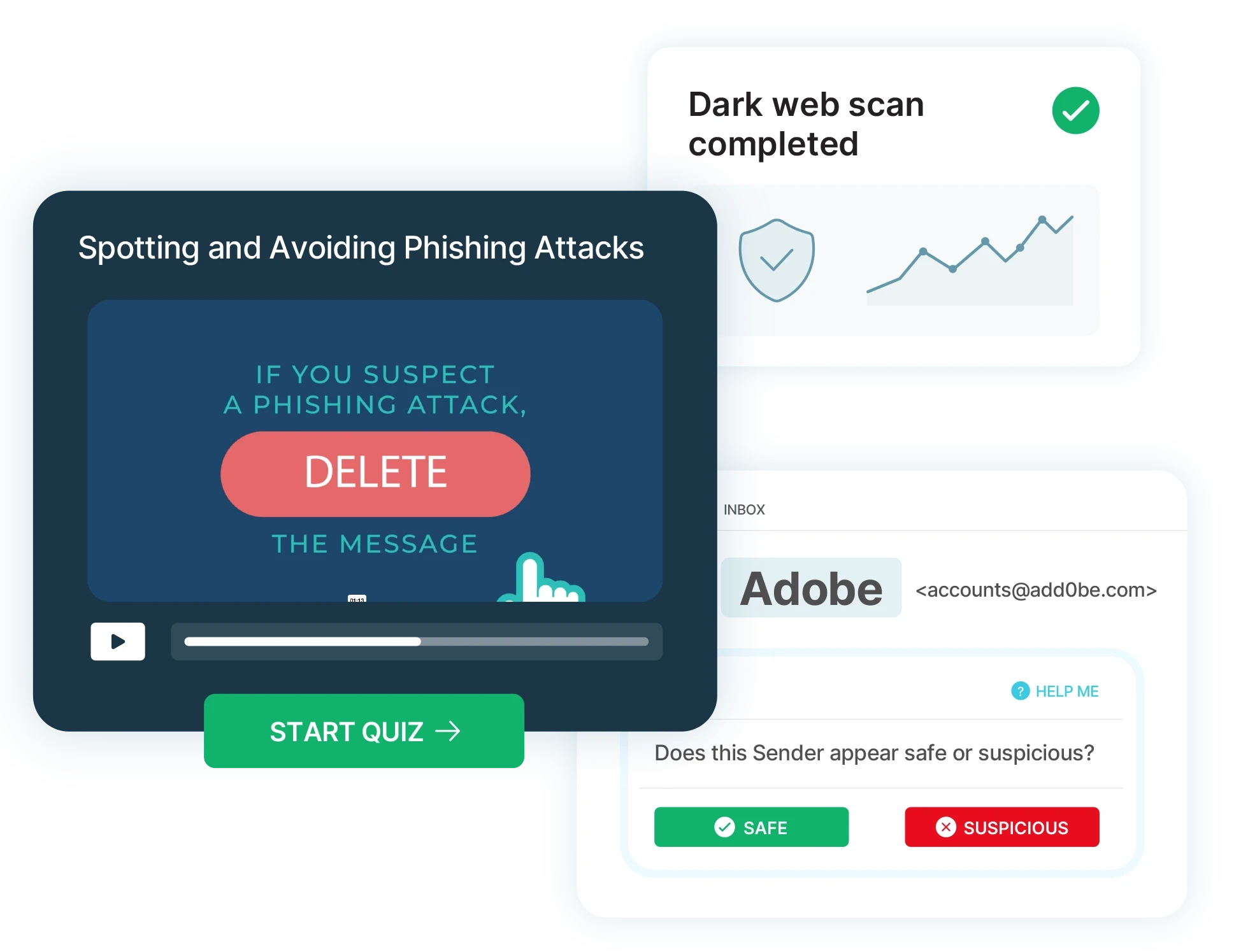
HootPhish tells people up front: this is practice. No fake “package delivery” trap. No secret scorecard. No walk of shame to your manager or HR. Just a smiling, high-fiving coach, a hyper-realistic email, and rewards for every phish you spot – flock points, avatars, certificates, and bragging rights!
And now the U.S. government has put that positive reinforcement in writing.
On October 6, 2026, the United States Patent and Trademark Office granted CyberHoot U.S. Patent No. 12,756,737 B2, “Positive Reinforcement Phishing Identification Simulations.” It covers HootPhish, our method for teaching people to spot phishing without bamboozling anyone.
We patented positivity. Here’s why that’s a big deal for your business and your people.
From the employee’s chair
You know the feeling. A “Your package couldn’t be delivered!” email lands in your inbox. You click. Your stomach drops.
Minutes, days, or even weeks later, a notice arrives: you failed a phishing test. Then comes the mandatory training video. If you’re unlucky, you also get a meeting with HR or your manager to go over your mistake.
Your own IT team set a trap, graded you on a test you didn’t know you were taking, and then assigned homework about an email you’d already forgotten. Nobody walks away from that feeling good, including IT.
From the provider’s chair
Now flip the view. If you’re an MSP, you’re the IT department that sent that email. Our patent filing is blunt about what it costs you: attack-based testing is a punishment-based method that can sour employees on IT and reduce their interest in more training.
Your clients’ employees don’t resent the phishing tool. They resent you. Resentful users stop asking IT for help, and that’s when small problems become big ones. What does that do to client retention?
The patent’s background lays out several other problems with attack-based testing:
The patented approach flips the model. We call it non-deceptive, browser-based phishing training. In plain English:
Put simply: HootPhish works like an open-book test with your favorite coach instead of a trapdoor.
The patent isn’t the point. What it backs up is what you need for employee engagement, behavior change, and even client retention:
Patents are nice. Results are better. Here’s what happens when HootPhish training treats users like allies instead of targets.
The numbers. After nine months of CyberHoot awareness training, the Fellsway Group phish tested a financial management firm with $4 billion in assets. Zero percent of employees clicked. The exact same phishing attack had a 30% click rate at another client that hadn’t yet done CyberHoot training. John Mumford, Chief Risk Officer at Fellsway Group, put it this way: “The product really proves its worth!”
The behavior. However, numbers only tell you what happened. Admins tell you what it feels like:
“More employees now send me phishing emails they receive, stating ‘this is a phishing email’ as opposed to just clicking on them.”
— Tim Hurman, System Administrator, Single Digits (8+ year CyberHoot client)
That’s the opposite of the gotcha test. People who get ambushed learn to keep quiet. People who get taught learn to speak up, and then send you the suspicious email before they click.
Patent geeks, this one’s for you. The core claim (claim 1) covers a HootPhish exercise that:
The 18 dependent claims cover the finer details: popup-per-indicator flows, realistic typo-squatted domains, immediate scoring, reshuffled retakes, positive reinforcement on passing, adaptive difficulty, ranks and avatars, admin dashboards, and automated delivery without email filter bypass headaches.
For years, the industry assumed phishing training had to catch people out. The USPTO just recognized a method that builds skills and good will instead.
So if your clients’ users dread phishing tests, give them one that says hello first. Let’s Hoot Up!
HootPhish Overview. | Leo LaPort Testimonial | Book Your Demo

Discover and share the latest cybersecurity trends, tips and best practices – alongside new threats to watch out for.

Most phishing tests lie to your employees. This one says hello first! HootPhish tells people up front: this is...
Read more
Severity: CRITICAL (CVSS 9.2) | Issued: October 22, 2026 On October 21, two critical flaws in PHP,...
Read more
Author: Katie Boquetti | Editorial: Craig Taylor Editorial by Craig Taylor: Even before Claude Code made...
Read moreGet sharper eyes on human risks, with the positive approach that beats traditional phish testing.