Vector Database / Vector Store

10th December 2025 | Cybrary Vector Database / Vector Store

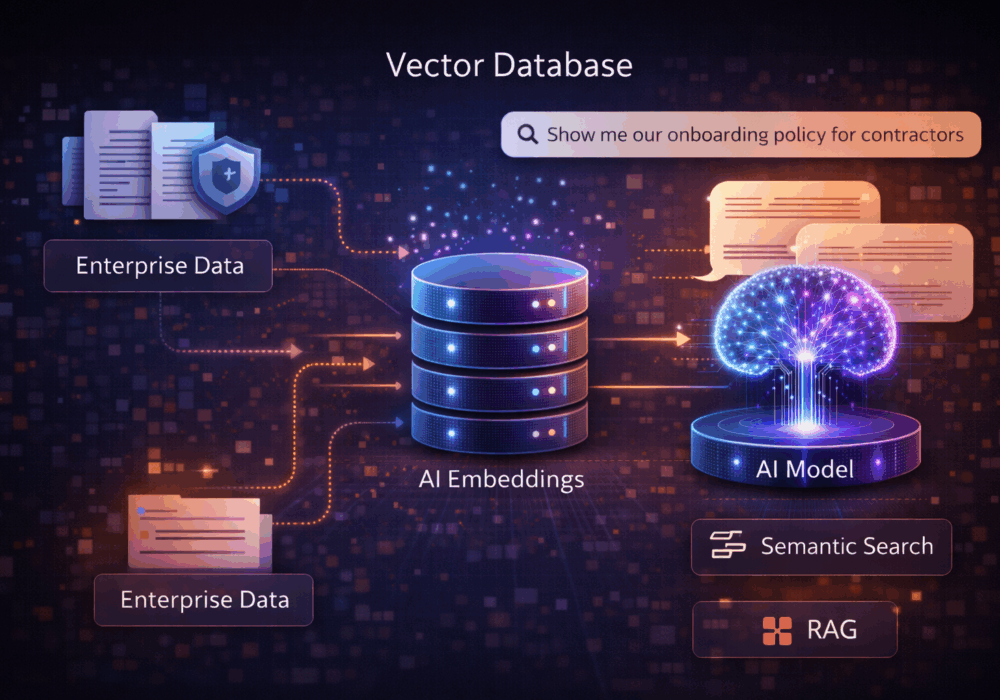
A vector database, also called a vector store, is a specialized data system designed to store and search vector embeddings, which are numerical representations of text, images, or other data created by machine learning models. These embeddings capture semantic meaning, allowing systems to find information based on similarity, not exact keywords.

Vector databases are a core component of modern AI systems, especially those using semantic search and Retrieval-Augmented Generation (RAG). Instead of asking “does this document contain these words,” the system asks “which documents are most similar in meaning to this question.”

Common uses include:

  • Searching enterprise documents by intent
  • Powering AI chatbots grounded in internal knowledge
  • Matching user queries to relevant tickets, policies, or logs

What This Means for SMBs

For small and medium-sized businesses, vector databases make AI practical and usable without massive engineering effort.

Key implications include:

  • Smarter search
    Employees can find answers even if they do not know the exact terms used in a document.
  • Better AI accuracy
    Vector stores enable RAG, allowing AI tools to answer from approved internal documents instead of guessing.
  • Knowledge reuse
    Existing documents, policies, and FAQs become searchable and useful through AI, without rewriting content.
  • Data control
    SMBs can keep data in defined repositories instead of exposing full systems to AI models.

For SMBs, a vector database often turns scattered documentation into a single, usable knowledge source.

What This Means for MSPs

For Managed Service Providers, vector databases are infrastructure, not a feature.

Key considerations include:

  • Tenant isolation
    Each client’s embeddings can be stored separately, preventing cross-client data exposure.
  • Scalable AI services
    Vector stores enable MSPs to deploy AI assistants across many customers using the same architecture.
  • Performance and cost control
    Efficient similarity search reduces unnecessary model calls and improves response times.
  • Security and governance
    Access controls, encryption, and lifecycle management apply to vector data just like any other sensitive system.
  • Service differentiation
    MSPs can offer AI-powered knowledge bases, helpdesks, and vCISO assistants backed by client-specific data.

Practical Takeaway

Vector databases are what allow AI systems to retrieve the right information at the right time.

For SMBs and MSPs:

  • They enable semantic search and RAG
  • They reduce hallucinations by grounding answers
  • They require the same security, access control, and monitoring as traditional databases

Additional Reading:

CyberHoot does have some other resources available for your use. Below are links to all of our resources, feel free to check them out whenever you like:


Latest Blogs

Stay sharp with the latest security insights

Discover and share the latest cybersecurity trends, tips and best practices – alongside new threats to watch out for.

When the “CEO” Calls and Asks You to Move Money Fast

When the “CEO” Calls and Asks You to Move Money Fast

A guide to spotting senior executive impersonation scams before the fake CEO gets a real wire transfer. It...

Read more
When the Attack Looks Just Like You

When the Attack Looks Just Like You

Artificial Intelligence (or AI) is making phishing emails smarter, malware sneakier, and credential theft easier...

Read more
Cybercriminals Are Exploiting DocuSign with Customizable Phishing Templates

Cybercriminals Are Exploiting DocuSign with Customizable Phishing Templates

DocuSign has become one of the most trusted tools in modern business. Contracts, HR paperwork, NDAs, vendor...

Read more