Retrieval-Augmented Generation (RAG)

10th December 2025 | Cybrary Retrieval-Augmented Generation (RAG)

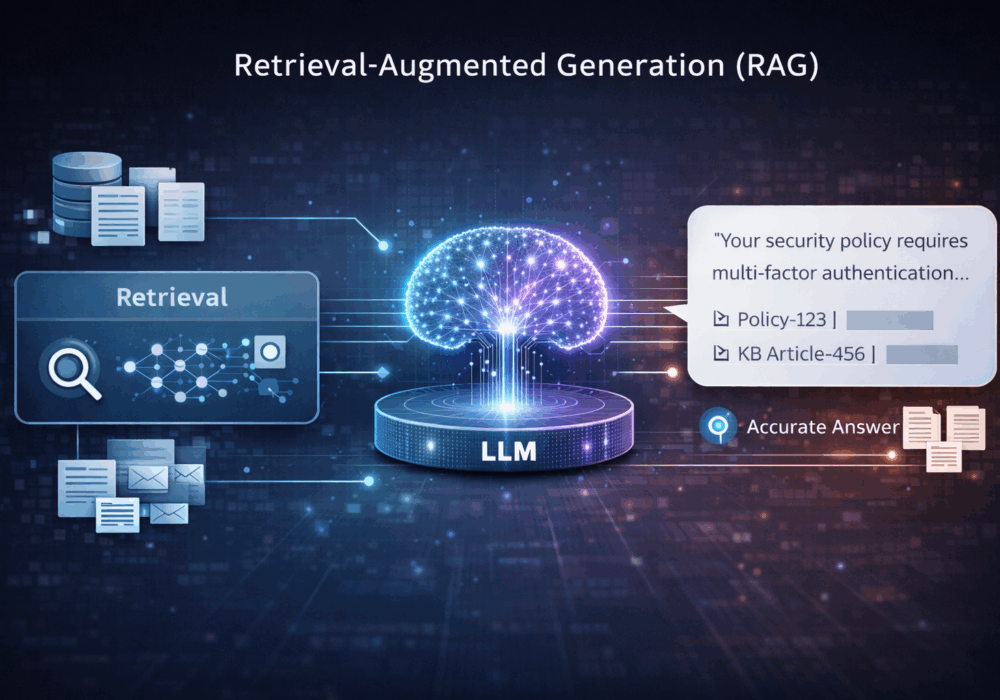
Retrieval-Augmented Generation (RAG) is an AI architecture pattern that combines a search or retrieval step with a large language model (LLM), so the model answers questions using specific, approved source documents rather than relying only on its training data.

In a RAG system, the workflow is typically:

  1. A user asks a question
  2. The system searches relevant enterprise documents, such as policies, tickets, knowledge bases, or contracts
  3. The retrieved content is passed to the LLM as context
  4. The LLM generates an answer grounded in those documents

This approach allows AI chatbots to provide accurate, up-to-date, and context-specific answers while reducing hallucinations and uncontrolled data exposure.

What This Means for SMBs

For small and medium-sized businesses, RAG is often the difference between unsafe AI experimentation and practical AI adoption.

Key implications include:

  • Answers based on your data
    Instead of generic responses, RAG allows AI tools to answer from your actual policies, procedures, and documentation.
  • Reduced risk of misinformation
    Because responses are grounded in retrieved documents, RAG significantly lowers the chance of confident but wrong answers.
  • Improved security posture
    Data stays within defined repositories, and access can be limited by role, reducing accidental disclosure.
  • Faster onboarding and support
    Employees can self-serve answers from internal documentation without exposing raw files or sensitive systems.

In short, RAG enables SMBs to use AI safely and usefully, without handing full control to a general-purpose model.

What This Means for MSPs

For Managed Service Providers, RAG is foundational to secure, scalable AI services.

Key considerations include:

  • Tenant isolation
    RAG allows strict separation of client data, ensuring one customer’s documents are never used to answer another’s questions.
  • Controlled data scope
    MSPs can limit exactly which documents, systems, or time ranges an AI assistant is allowed to reference.
  • Auditability and trust
    Many RAG systems can show citations or source references, helping MSPs explain where answers came from.
  • Lower liability risk
    Grounding responses in approved documentation reduces the risk of AI-generated guidance causing client harm.
  • Service differentiation
    Secure, RAG-based AI assistants can enhance helpdesks, vCISO services, and internal operations without compromising security.

Why RAG Is Vital for Secure Enterprise AI

Without RAG:

  • LLMs guess
  • Answers drift
  • Sensitive data boundaries blur

With RAG:

  • Answers are grounded
  • Data access is explicit
  • Security controls remain enforceable

Practical Takeaway

RAG turns an LLM from a general language engine into a controlled enterprise assistant.

For SMBs and MSPs alike:

  • RAG is not optional for serious deployments
  • It is a core security and governance control
  • It enables AI adoption without surrendering data control

Additional Reading:

CyberHoot does have some other resources available for your use. Below are links to all of our resources, feel free to check them out whenever you like:


Latest Blogs

Stay sharp with the latest security insights

Discover and share the latest cybersecurity trends, tips and best practices – alongside new threats to watch out for.
That DocuSign Email Probably Isn’t From DocuSign

That DocuSign Email Probably Isn’t From DocuSign

Your inbox sees dozens of emails every day that look completely routine. A DocuSign notification fits right in. A...

Read more
PromptSpy: The Android Malware That Hired an AI Assistant

PromptSpy: The Android Malware That Hired an AI Assistant

And yes, Google's Gemini AI had no idea it was working for the bad guys. Malware has always followed a script....

Read more
Ransomware Entry Points are Changing. Here Is What to Do About It?

Ransomware Entry Points are Changing. Here Is What to Do About It?

Ransomware groups are not breaking in organizations the same way they did five years ago. The entry methods have...

Read more