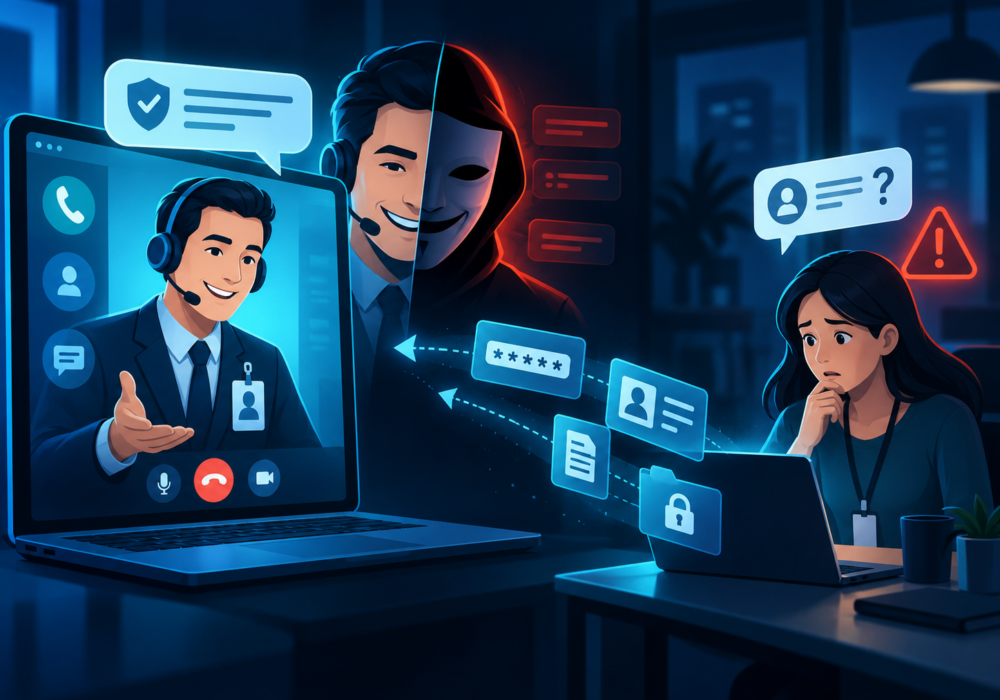
Pretexting is a social engineering technique in which an attacker creates a believable story, identity, or situation to convince someone to provide information or take an action they normally would not.
The false story is called the pretext.
For example, an attacker might pretend to be:
The attacker often researches the organization beforehand so the request contains enough accurate information to appear legitimate.
Pretexting relies less on technical exploitation and more on manipulating trust, urgency, authority, fear, or helpfulness.
SMBs may be particularly vulnerable because employees often know one another personally and operate with fewer formal approval processes.
A believable request that appears to come from an owner, manager, coworker, or trusted vendor may therefore receive less scrutiny.
Organizations should establish verification procedures for sensitive requests, especially those involving:
Employees should verify unusual requests using a trusted method of communication rather than relying only on the email, text message, or phone call that initiated the request.
Pretexting represents a major risk for MSP help desks because technicians have the ability to reset passwords, change MFA methods, create accounts, and modify customer environments.
An attacker who successfully impersonates a client employee or administrator may try to convince a technician to provide access.
MSPs should establish documented identity-verification procedures for high-risk support requests. Help desk employees should be trained to resist urgency and escalation tactics when the request involves security controls.
Pretexting attacks succeed when a believable story causes someone to bypass normal security procedures.
Trust should never replace verification when a request involves money, credentials, sensitive information, or privileged access.
Additional Reading:
CyberHoot does have some other resources available for your use. Below are links to all of our resources, feel free to check them out whenever you like:
Discover and share the latest cybersecurity trends, tips and best practices – alongside new threats to watch out for.

Author: Katie Boquetti | Editorial: Craig Taylor Editorial by Craig Taylor: Even before Claude Code made...
Read more
Author: Katie Boquetti | Editorial: Craig Taylor Editorial by Craig Taylor: We've known for a while here...
Read more
Author: Katie Boquetti | Editorial: Craig Taylor Editorial by Craig Taylor: A CAPTCHA should test whether...
Read moreGet sharper eyes on human risks, with the positive approach that beats traditional phish testing.