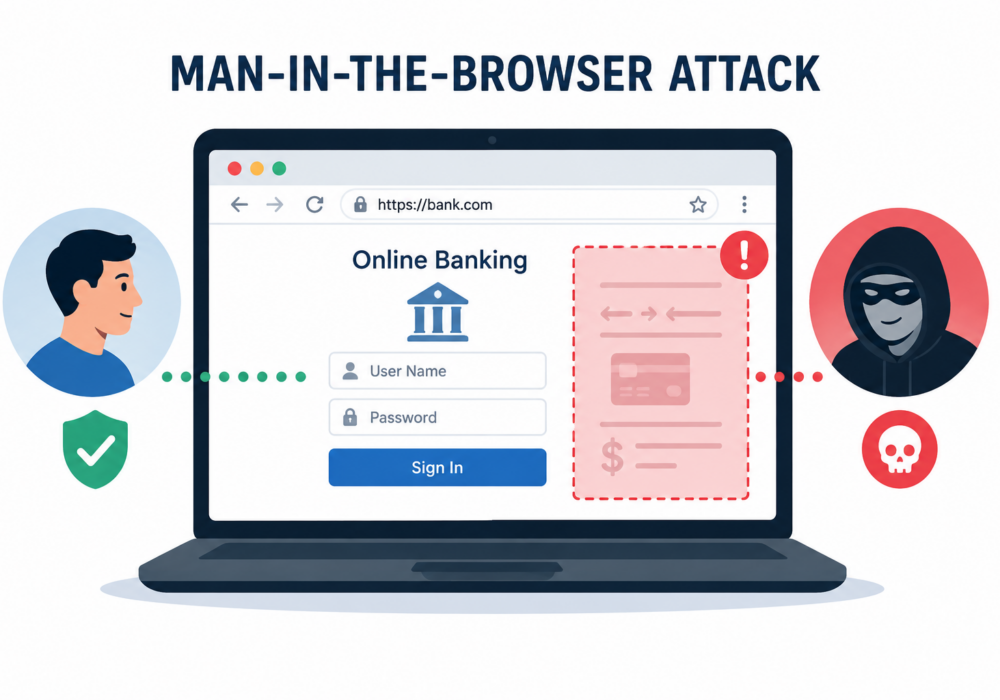
A Man-in-the-Browser (MitB) attack is a type of cyberattack in which malicious software (malware) infects a user’s web browser and secretly intercepts or modifies information as it is entered or displayed. Unlike phishing attacks that trick users into revealing credentials, a MitB attack operates inside the browser itself, allowing attackers to manipulate transactions even after a user has successfully logged in.
Because the browser appears to function normally, victims often have no indication that their information or transactions are being altered.
A typical attack follows these steps:
Because the attack occurs after encryption (HTTPS) has already secured the connection, traditional network security tools often cannot detect it.
Man-in-the-Browser attacks commonly target:
Small and midsize businesses frequently conduct banking, payroll, and vendor payments through web browsers. A successful MitB attack can result in:
Because SMBs often lack dedicated security monitoring, these attacks may go unnoticed until after funds have been transferred or accounts compromised.
Managed Service Providers (MSPs) have privileged access to customer environments, making administrator workstations attractive targets.
A successful MitB attack could allow attackers to:
Since a single compromised technician account can affect numerous customers, protecting browser sessions is essential for MSP security.
Organizations can reduce their risk by:
Although their names are similar, these attacks are different:
| Man-in-the-Browser | Man-in-the-Middle |
|---|---|
| Malware infects the victim’s browser | Attacker intercepts network traffic |
| Operates inside the browser | Operates between the user and the server |
| Can modify transactions after login | Captures or alters communications in transit |
| Often invisible to network security tools | Often mitigated by HTTPS and secure networks |
A Man-in-the-Browser attack is a sophisticated form of malware that hijacks a user’s browser to steal credentials, manipulate transactions, and bypass traditional security protections. For SMBs, it can lead to financial fraud and account compromise. For MSPs, it poses an even greater risk because compromised administrator browsers can provide attackers with access to multiple customer environments, making strong endpoint protection and browser security critical.
Additional Reading:
CyberHoot does have some other resources available for your use. Below are links to all of our resources, feel free to check them out whenever you like:
Discover and share the latest cybersecurity trends, tips and best practices – alongside new threats to watch out for.
Author: Katie Boquetti | Editorial: Craig Taylor Editorial by Craig Taylor: I'm blessed to have...
Read more
Author: Katie Boquetti | Editorial: Craig Taylor Editorial by Craig Taylor: I remember the early days of...
Read more
Author: Katie Boquetti | Editorial: Craig Taylor Editorial by Craig Taylor: This week's blog has a...
Read moreGet sharper eyes on human risks, with the positive approach that beats traditional phish testing.