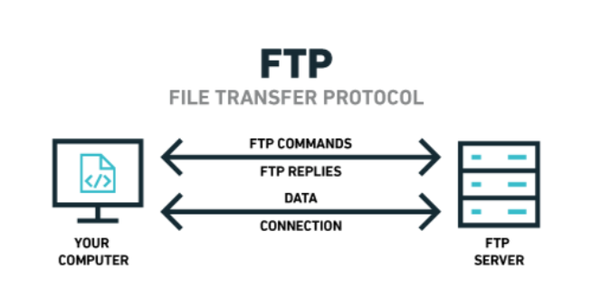
File Transfer Protocol (FTP) is a communications protocol used for transferring or exchanging files between two computers. These transferring of files generally is authenticated by username and password credentials. Anonymous FTP allows users to access files, programs and other data from the Internet without the need for a user ID or password. Web sites are sometimes designed to allow users to use ‘anonymous’ or ‘guest’ as a user ID and an email address for a password. File Transfer Protocol is the Internet standard for transferring or exchanging files from one computer to another using TCP or IP networks.
File Transfer Protocol has largely been supplanted by the more secure and commonly used HTTPS protocol used for web browsing. FTP can really be thought of as a deprecated protocol not to be used anymore.
Source: Techopedia
Related Readings: Google is Completely Removing FTP Access from Chrome
Not really. FTP is not a secure protocol to be used by businesses anymore. It does not encrypt the data transferred over this protocol. Secure FTP does exist and uses Transport Layer Security to encrypt the file transfer process but this requires a special client which is no longer necessary when Chrome, Firefox, and Microsoft Edge can all transfer files securely.
Discover and share the latest cybersecurity trends, tips and best practices – alongside new threats to watch out for.

Most phishing tests lie to your employees. This one says hello first! HootPhish tells people up front: this is...
Read more
Severity: CRITICAL (CVSS 9.2) | Issued: October 22, 2026 On October 21, two critical flaws in PHP,...
Read more
Author: Katie Boquetti | Editorial: Craig Taylor Editorial by Craig Taylor: Even before Claude Code made...
Read moreGet sharper eyes on human risks, with the positive approach that beats traditional phish testing.