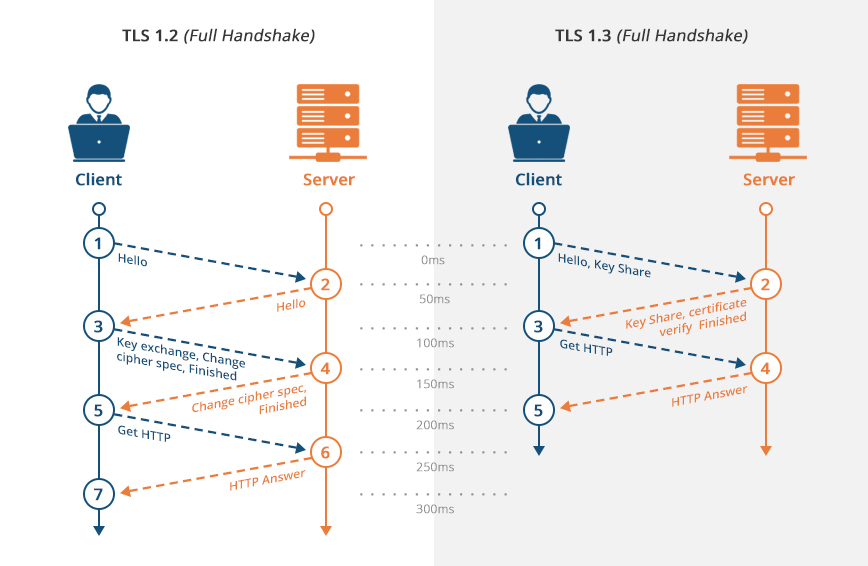
Transport Layer Security (TLS) is a security protocol made for privacy and data security for communications over the Internet. A primary use case of TLS is encrypting the communication between web applications and servers, such as web browsers loading a website. TLS can also be used to encrypt other communications such as email, messaging, and voice over IP (VOIP). If you are to look at the URLs of most websites, they feature the security protocol HTTPS, for example, https://cyberhoot.com/. Wherever there is HTTPS used, it is employing TLS encryption.
In recent years, TLS 1.2 flaws have been identified which necessitated a migration to TLS version 1.3 which is more secure, efficient, and the gold standard for online encrypted communications. If you’re not using TLS 1.3 yet, you should be. Watch the advanced video below to know why.
Source: CloudFlare
Related Terms: Encryption
Whenever your employees are on the Internet, they should always be aware of the URL and ensuring that HTTPS is employed for a secure connection.
https://www.youtube.com/embed/AlE5X1NlHgg
Discover and share the latest cybersecurity trends, tips and best practices – alongside new threats to watch out for.

Ever had your phone suddenly lose service for no reason, followed by a flood of “reset your password”...
Read more
As smart homes get smarter, so do their habits of watching, sensing, and reporting. Enter WiFi Motion Detection, a...
Read more
Spoiler alert: If you’re still using “password123” or “iloveyou” for your login… it’s time for an...
Read moreGet sharper eyes on human risks, with the positive approach that beats traditional phish testing.