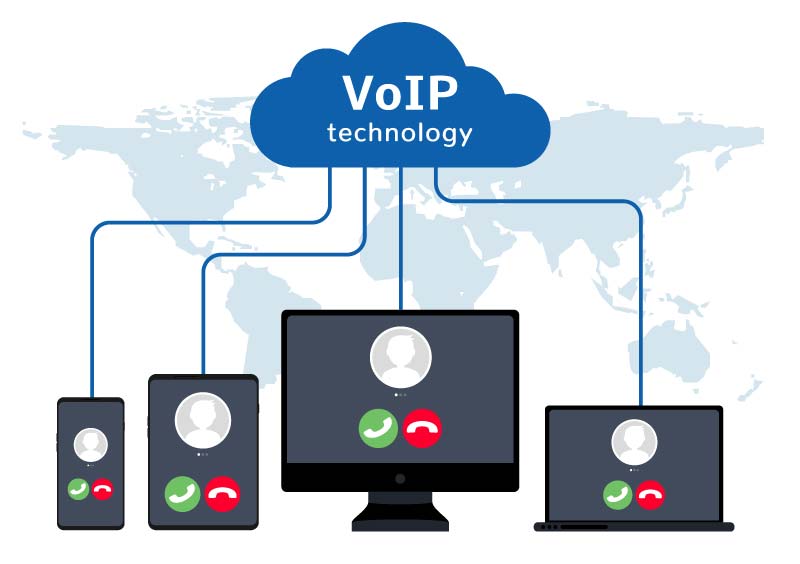
Voice over Internet Protocol (VoIP) is essentially a telephone connection over the Internet. The data is sent digitally, using the Internet Protocol (IP) instead of analog telephone lines. This allows people to talk to one another long-distance and around the world without having to pay long distance or international phone charges. This can be done through various applications, such as Skype, WhatsApp, Google Hangouts, Zoom, and Facebook Messenger.
Source: TechTerms, Vonage
Additional Reading: RingCentral Offers 3 Free Months of VoIP to Organizations Impacted by Coronavirus
SMBs tend to value simplicity, and that’s why many are making the switch from traditional phone systems to voice over internet protocol (VoIP). The traditional phone system has had a presence in the business world for decades, VoIP technology has exposed its age by wrapping most of the same features in a simplified, cloud-based package. When one option is faster to set up, easier to maintain, and more affordable and feature-packed than the alternative, any company would be remiss not to explore a potential upgrade. In other words, VoIP technology doesn’t just bring numerous advantages to the table, in many ways, it represents the next step for small business communication.
Discover and share the latest cybersecurity trends, tips and best practices – alongside new threats to watch out for.

Author: Katie Boquetti | Editorial: Craig Taylor Editorial by Craig Taylor: We've known for a while here...
Read more
Author: Katie Boquetti | Editorial: Craig Taylor Editorial by Craig Taylor: A CAPTCHA should test whether...
Read more
Author: Katie Boquetti | Editorial: Craig Taylor Editorial by Craig Taylor: I'm blessed to have...
Read moreGet sharper eyes on human risks, with the positive approach that beats traditional phish testing.