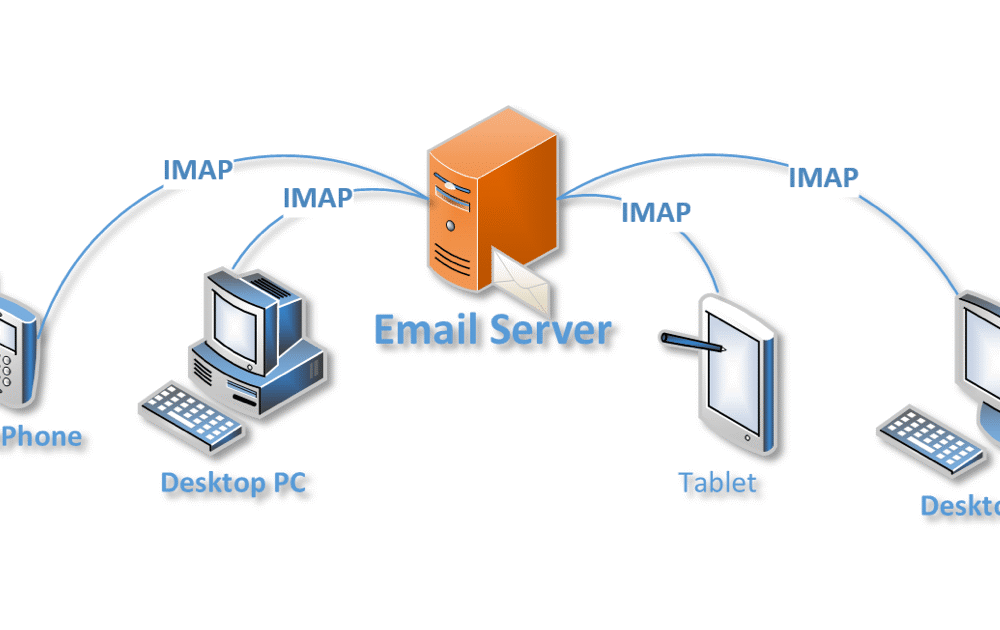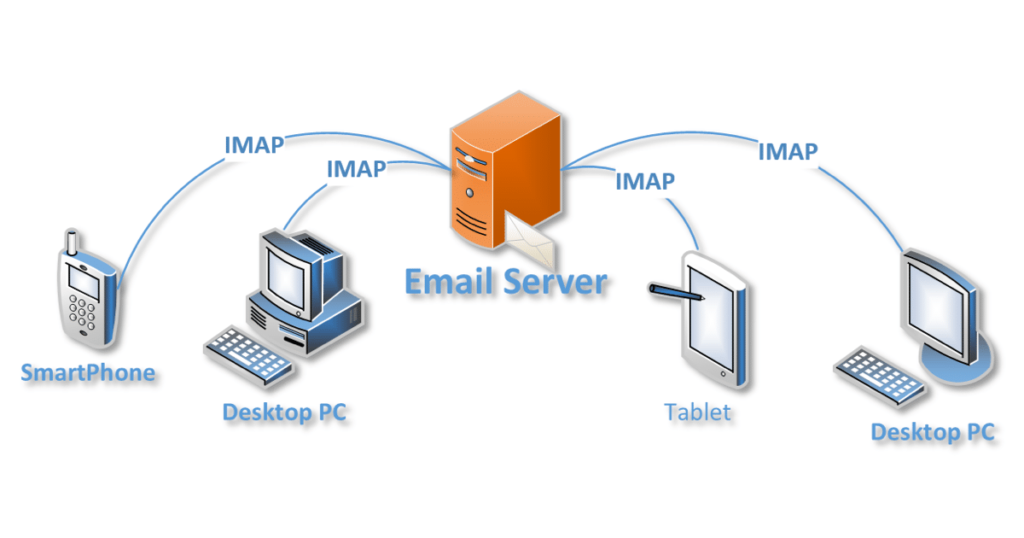
Internet Message Access Protocol (IMAP) is a standard email protocol, first widely deployed in the 1980s, that stores email messages on a mail server, but allows the end user to view and manipulate the messages as though they were stored locally on the end user’s computing device. This can help employees at a business to organize messages into specific folders, let clients know which email have been read, flagged for urgency, or follow-up and save draft messages on the server.
Source: TechTarget
Additional Reading: Where does IMAP Security Fall Short?
Many businesses have left IMAP for webmail services such as GSuite and O365 because they generally are far more secure than IMAP. They provide encrypted access, two-factor authentication, and robust services that have far exceeded the capabilities of IMAP. If your business is still relying on IMAP, get off of it today!
Discover and share the latest cybersecurity trends, tips and best practices – alongside new threats to watch out for.

Author: Katie Boquetti | Editorial: Craig Taylor Editorial by Craig Taylor: This week's blog has a...
Read more
Every so often a piece of malware comes along with a trick clever enough to make security researchers pause and...
Read more
Author: Craig Taylor I cannot visit a coffee shop, go for a round of golf, have a friendly conversation with...
Read moreGet sharper eyes on human risks, with the positive approach that beats traditional phish testing.