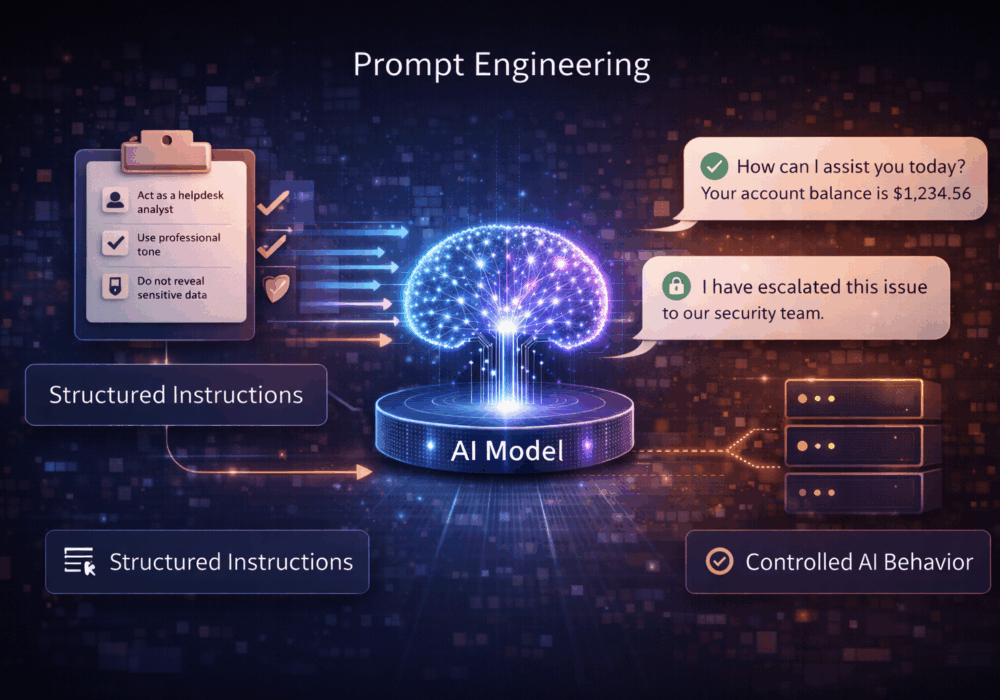
Prompt engineering is the practice of designing, structuring, and refining the instructions given to a large language model, LLM, to reliably produce accurate, safe, and useful outputs. It involves controlling context, constraints, format, and intent through carefully written prompts rather than changing the model itself.
Effective prompt engineering may include:
Prompt engineering does not change how the model is trained. It shapes how the model behaves at inference time.
For small and medium-sized businesses, prompt engineering is a low-cost, high-impact way to get value from AI without custom development.
Key implications include:
For SMBs, prompt engineering is often the first layer of AI governance.
For Managed Service Providers, prompt engineering becomes a service capability, not just a usage skill.
Key considerations include:
Prompt engineering is not “prompt hacking.” It is applied operational discipline.
For SMBs and MSPs:
In short, prompt engineering is how organizations turn generic AI into predictable, business-safe tools.
Additional Reading:
CyberHoot does have some other resources available for your use. Below are links to all of our resources, feel free to check them out whenever you like:
Discover and share the latest cybersecurity trends, tips and best practices – alongside new threats to watch out for.

And yes, Google's Gemini AI had no idea it was working for the bad guys. Malware has always followed a script....
Read more
Ransomware groups are not breaking in organizations the same way they did five years ago. The entry methods have...
Read more
If a Chrome extension promises to remove security pop-ups and generate MFA codes, that should make you...
Read moreGet sharper eyes on human risks, with the positive approach that beats traditional phish testing.