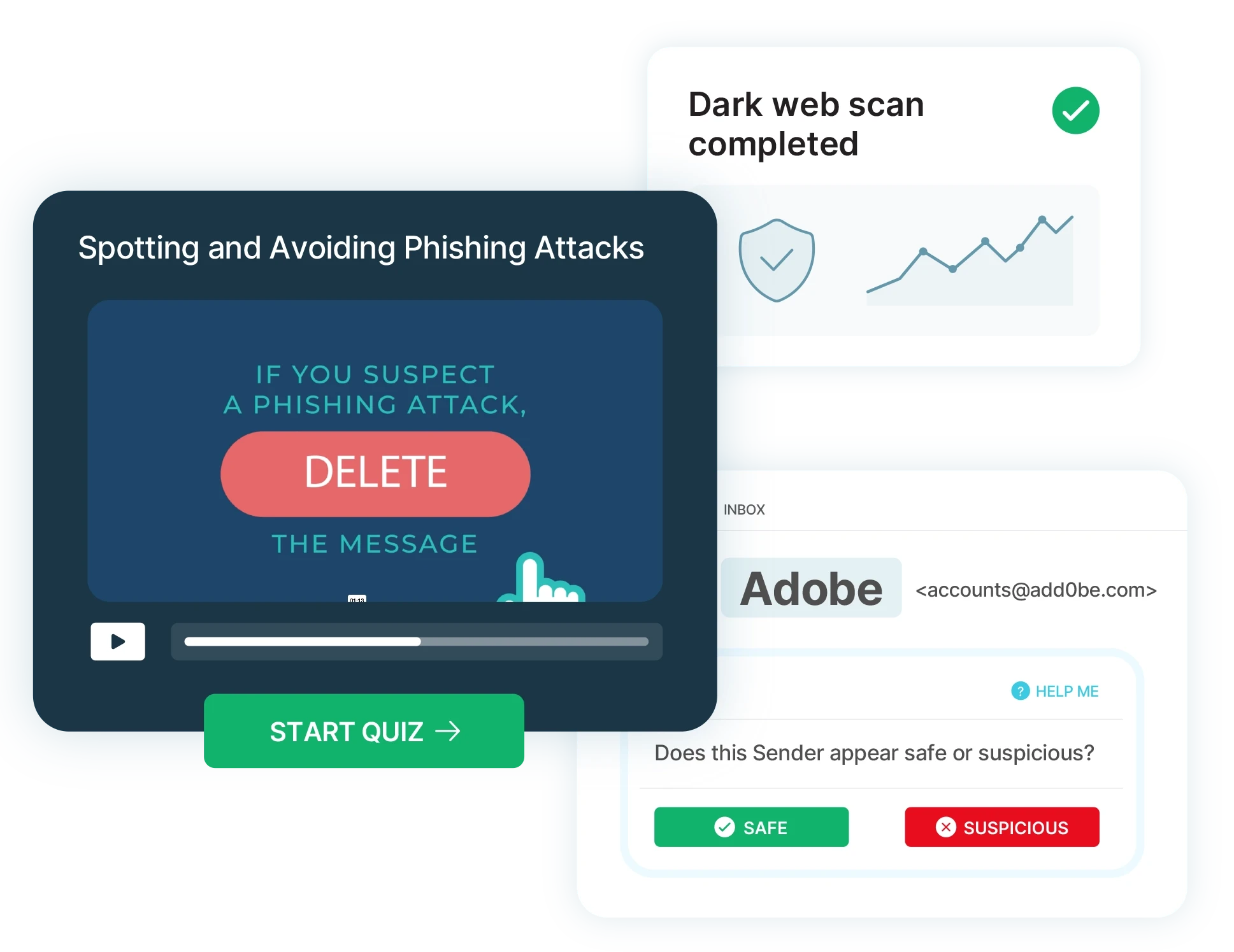
Data Loss Prevention is a set of procedures and mechanisms to stop sensitive data from leaving a security boundary. This helps you hold onto your important data and information so you do not lose it or have it end up in the wrong hands.
Data Loss Prevention is often performed on email services because this is one of the most prevalent and likely sources of data exfiltration in businesses today.
Your business needs to take proactive measures today to first reduce its chances of being hit by ransomware, phishing, or other cybersecurity attacks. Secondly, validate backups and disaster recovery plans are current and functioning in case you end up hit with ransomware. CyberHoot recommends the following best practices to avoid, prepare for, and prevent damage from these attacks:
Start building your robust, defense-in-depth cybersecurity plan at CyberHoot.
Related Terms: Data Breach, Data Exfiltration, Data Loss
Source: Liu, S., & Kuhn, R. (2010, March/April). Data loss prevention. IEEE IT Professional, 11(2), pp. 10-13.
Discover and share the latest cybersecurity trends, tips and best practices – alongside new threats to watch out for.

And yes, Google's Gemini AI had no idea it was working for the bad guys. Malware has always followed a script....
Read more
Ransomware groups are not breaking in organizations the same way they did five years ago. The entry methods have...
Read more
If a Chrome extension promises to remove security pop-ups and generate MFA codes, that should make you...
Read moreGet sharper eyes on human risks, with the positive approach that beats traditional phish testing.