Overview
CyberHoot provides a simple, engaging cybersecurity training experience designed to strengthen user awareness and reduce risk. This guide walks you through what an end user can expect — from their first email invitation to completing phishing simulations and viewing their progress.
Watch the walkthrough video here:
🎥 End-User Experience in CyberHoot
CyberHoot User Experience Overview
1. Welcome to CyberHoot
When you’re first enrolled, you’ll receive a welcome email introducing you to your company’s new cybersecurity training program.
- The email includes your company logo and a personalized greeting.
- It instructs you to keep an eye on your inbox, as your first training assignment will arrive the next day.
- Future assignment emails will include unique links that take you directly to your specific assignment, whether it’s a training video and quiz, or phishing simulation.
2. Training Assignments
Each assignment email will clearly state:
- The type of assignment (e.g., a video module or phishing simulation).
- The due date for completion.
- A unique link that takes you directly to your task.
Video Training Example
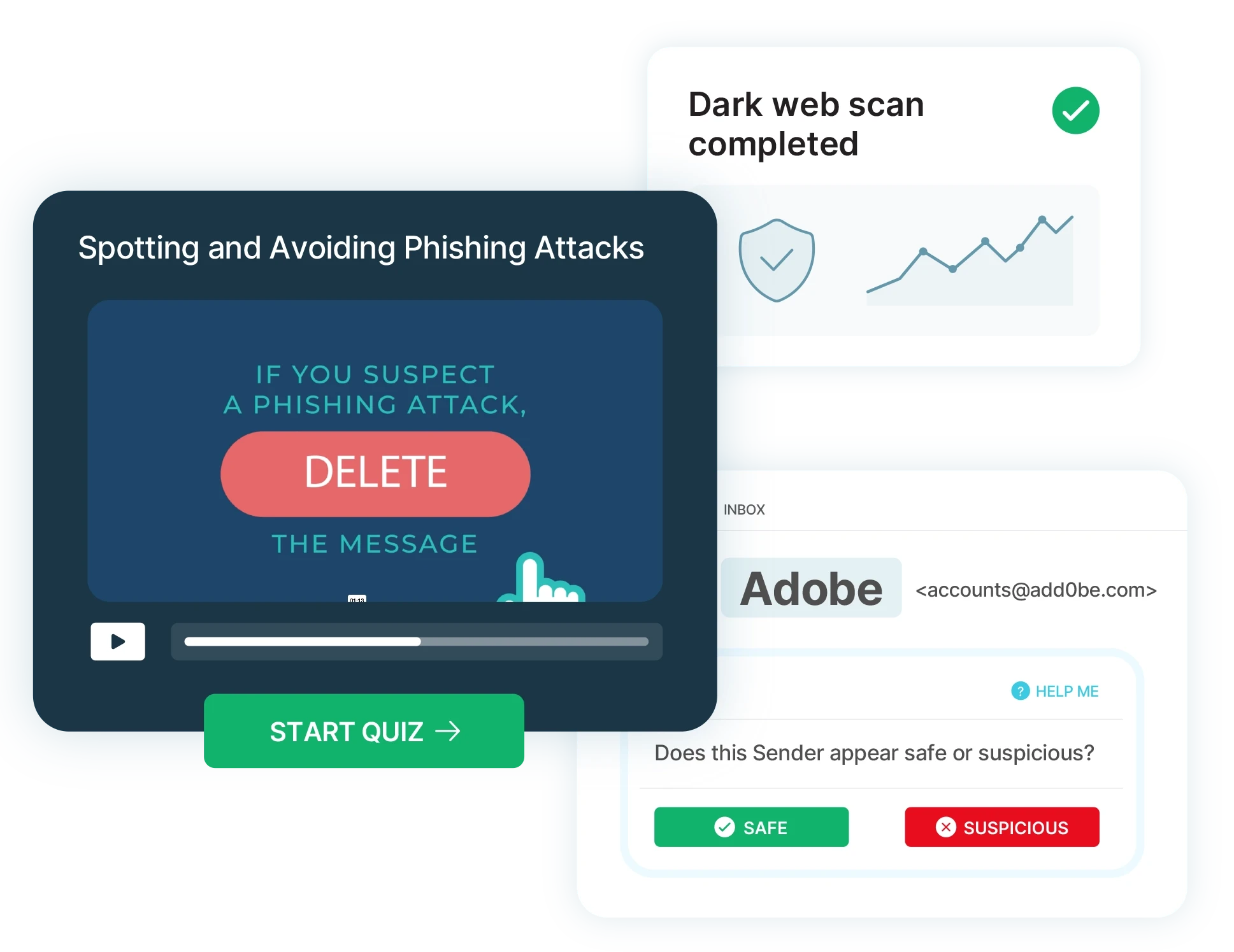
A video training assignment email includes your company logo, the title of the module, and a link that says “Watch Video.”
Once you click it:
- The video player opens and the training begins.
- After watching, you’ll take a short quiz to confirm your understanding.
- You’ll need to meet a minimum passing score to complete the module.
- If you don’t pass on your first attempt, you can retake the quiz, but note that the questions will change order.
3. Phishing Simulation Assignments
You’ll also receive phishing simulation assignments. These simulate real-world phishing emails to help you learn how to identify suspicious messages safely.
When you open a phishing assignment email, you’ll:
- Click the provided link, which opens a simulated phishing message.
- Analyze the email and mark each indicator as either safe or suspicious.
- Review areas such as:
- Sender information — hover over the sender’s name to verify the email address.
- Subject line — look for urgency, spelling errors, or unexpected language.
- Greeting — generic greetings like “Valued Customer” are red flags.
- Spelling and grammar — poor grammar often signals a phishing attempt.
- Links — hover over them to see the true destination (e.g.,
netflx.com instead of netflix.com).
If you need help, there’s a “Help Me” button that provides hints and explanations for each indicator.
4. Completing Assignments and Viewing Results
Once you finish analyzing or completing your training:
- You’ll receive your score and can review any missed indicators.
- If you achieve a passing score, you’ll see a Certificate of Completion option to download or print.
- Your CyberRank (a gamified score) appears on your right-hand side, showing your progress relative to peers.
5. Accessing the My Assignments Portal
When finished completing an assignment, you can click the “My Assignments” button to:
- View all active and completed assignments.
- Check due dates and upcoming tasks.
- Revisit past trainings and review your scores.
- Download certificates and track your overall progress.
- See your CyberRank and compare progress with colleagues.
6. Key Takeaways
- Watch your inbox for assignment emails.
- Click your unique link, do not share it with others.
- Complete each training or simulation before the due date.
- Aim to pass on your first try, but don’t worry, you can retake quizzes if needed.
- Use the Help Me tool if you get stuck.
- Download your certificate when finished.