October is National CyberSecurity Awareness Month (NCSAM). It is a collaborative effort between government and industry to raise awareness about the importance of cybersecurity.
CyberHoot is helping further the mission “to ensure that all Americans have the resources they need to be safer and more secure online.”
Wi-Fi hotspots in coffee shops, libraries, airports, hotels, universities, and other public places are convenient, but often they’re not secure. If you connect to a Wi-Fi network, and send information through websites or mobile apps, it might be accessed by someone else.
Today’s 3 min. CyberHoot video: Reducing WiFi Risks

FREE PLEDGE: please share our Reducing WiFi Risks Video with friends and family who might need this awareness using the social media links below.
CyberHoot does have some other resources available for your use. Below are links to all of our resources, feel free to check them out whenever you like:
Note: If you’d like to subscribe to our newsletter, visit any link above (besides infographics) and enter your email address on the right-hand side of the page, and click ‘Send Me Newsletters’.
Discover and share the latest cybersecurity trends, tips and best practices – alongside new threats to watch out for.
A Practical Brief for vCISOs THE WARNING WE IGNORED OR COULD NOT UNDERSTAND For years, the most credible...
Read more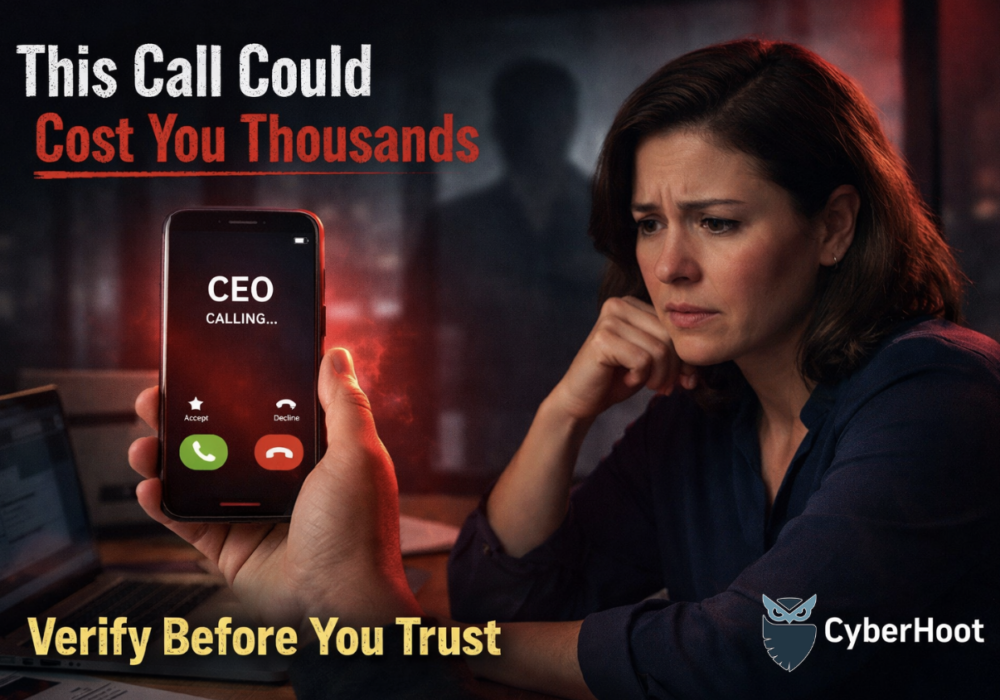
A guide to spotting senior executive impersonation scams before the fake CEO gets a real wire transfer. It...
Read more
Artificial Intelligence (or AI) is making phishing emails smarter, malware sneakier, and credential theft easier...
Read moreGet sharper eyes on human risks, with the positive approach that beats traditional phish testing.