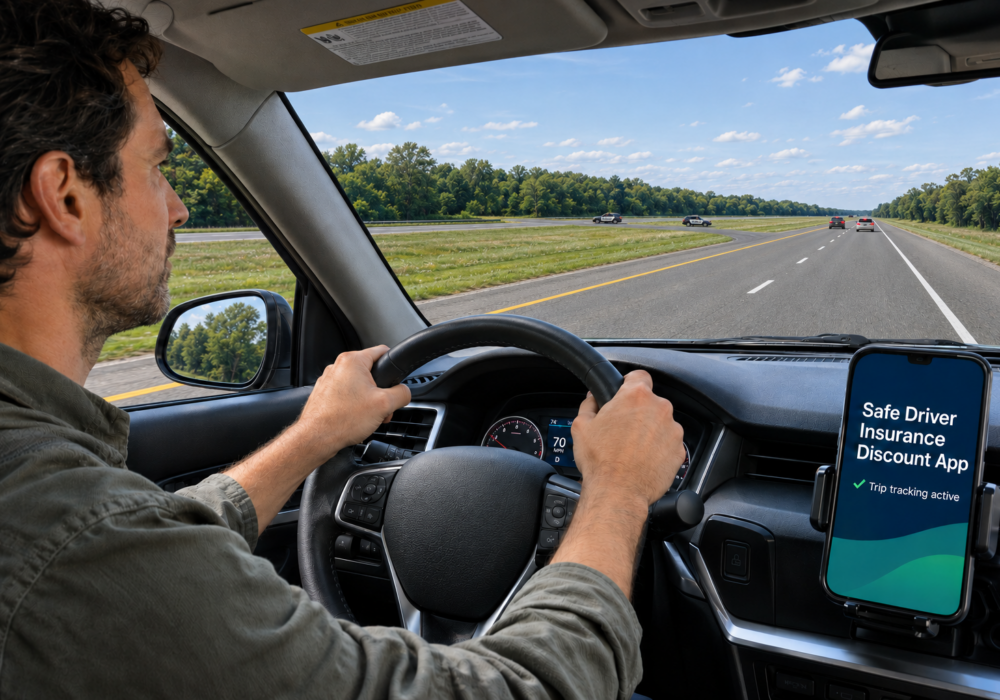
Picture yourself on the highway, cruising about 20 over the limit with the rest of traffic. Up ahead, brake lights flash across every lane. Nobody says a word, and nobody needs to. A police cruiser sits around the next bend. Traffic rolls past at the posted limit, and a mile later, once the cruiser shrinks in the rearview mirror, everyone speeds right back up.
Those drivers obeyed the law for about ninety seconds. Fear of a ticket created the good behavior, and the good behavior disappeared the moment the threat did.
Now put a different driver in the same traffic. This driver signed up for their insurer’s safe driving program, using a small plug-in device or a phone app. It tracks speed, hard braking, and phone use, and safe driving earns the driver a discount at renewal. This driver never taps the brakes for a cruiser. They already sit at the limit, because every trip counts toward the discount, cop or not.
The difference comes down to who controls the outcome. The first pack of drivers believe luck decides things. If they spot the cop in time, they win. The safe driver knows their own choices decide things. Psychologist Julian Rotter called this an internal locus of control, the belief your actions shape your results. When people see a clear link between what they do and something they value, the new behavior sticks. The safe driver also picks up perks nobody promised, like a calmer commute, fewer close callsog mindre stress at the end of the day. In many cases, these secondary benefits help maintain their safe driving habits even if the financial rewards stop!
Dog trainers learned this lesson long ago. A shock collar teaches a dog to fear the zap, and sometimes to fear the person holding the zapper. Treat training produces a dog who shows up for the next session wagging its tail. Owners enjoy it more too.
Psychologists Martin Seligman and Steven Maier studied the darker side of this in the 1960s. Dogs exposed to shocks they had no way to escape eventually stopped trying, even after a clear exit appeared. The researchers named the result learned helplessness. When nothing you do changes the outcome, you stop doing anything.
Swap the dog for an employee and the shock for a public scolding over a failed phishing test, and the pattern looks familiar to many of us. People click through training without reading or digesting it. They ignore training reminders. They decide security belongs to IT and stop thinking about it, abdicating any responsibility for it. Leaders call this apati. In many offices, a better explanation is lært hjelpesløshet, built by years of gotcha tests and finger pointing.
Think back to your favorite teacher. This person never rapped your knuckles with a yardstick. They got excited when you asked a question. They handed out gold stars, extra recess, or a “great thinking” compliment in front of the whole class. You raised your hand again the next day, and the day after. Years later, you still enjoy the subject because of them.
Great teachers made learning feel good, and the habit of learning outlived the class. Your security program deserves the same positiv forsterkning nærme seg.
All three stories point to one lesson. Punishment produces good behavior only while someone watches. Rewards produce habits people keep when nobody is watching.
Many organizations still run security awareness like a speed trap. They send gotcha phishing emails, circulate lists of who failed, and assign a 45-minute remediation video as a penalty. Employees learn to dread training, and anxiety or dread never built a lasting habit.
CyberHoot wants you to try the opposite approach. Stop publicly calling out the people who struggle, and start publicly celebrating the people who succeed. Better still, implement small rewards for those who succeed and make them public knowledge for the best habit-forming outcomes.
The Free Lunch Drawing. Each month, everyone above 80 compliance in your LMS is entered into a drawing for a free lunch. Announce the winner at your next team meeting or in a company email. People who sat at 60 percent last month suddenly find time for their assignments.
The Half Day Off. Once a year, give every employee who hit 100 percent of their assignments a half day off. Drop the bar to 95 percent if you want to reward more people. More people rewarded means more people participating and learning. A half day works out to about four hours out of roughly 2,080 working hours a year, a small price for a workforce with sharper security instincts and a culture that values cyber literacy.
The Shout-Out. Name your 100 percent finishers in the next all-company email or give them a 30-second round of applause at the all-hands. Recognition costs nothing and spreads fast.
Lead From the Front. Finish your own assignments first and say so out loud. When the leadership team sits at 100 percent, training stops looking like something done to people and starts looking like something the whole company does together.
Keep rewards small and frequent, and pair them with the personal wins. Security training protects your people at home too, including their bank accounts, their kids’ tablets, and their personal email. The reward gets people started. The personal value keeps them going. Play with different value drivers because everyone is different on what they value most.
Resist the urge to name them out loud. Public shaming feeds the same helplessness you want to cure.
Check in with low performers privately, and ask how you might help. Some people need a quieter time of day to focus. Some prefer a different format, need language support, or feel unsure about the technology. A five-minute, judgment-free conversation often solves what six reminder emails never did. Private help protects dignity, and dignity keeps people engaged.
Employees earn perks, recognition, and important skills they use personally and professionally. Managers, IT and HR all spend less time chasing completions and sending reminder emails. The business gains a team with stronger instincts for spotting phishing, scams, and social engineering, which lowers the odds of a costly mistake.
Pick one reward this week. Set an eligibility bar at 80 percent completion. Announce it in your next company email, and name the people already at the top. Then let the free lunch do the persuading. Within a month or two, you will see more people finishing training on time, asking better questions, and reporting suspicious emails with confidence. Celebrate the progress, keep the rewards rolling, and watch your security culture grow one good habit at a time. CyberHoot’s positive reinforcement platform delivers short training videos and non-deception phishing tests to help your team build powerful habits like this one, one small win at a time.
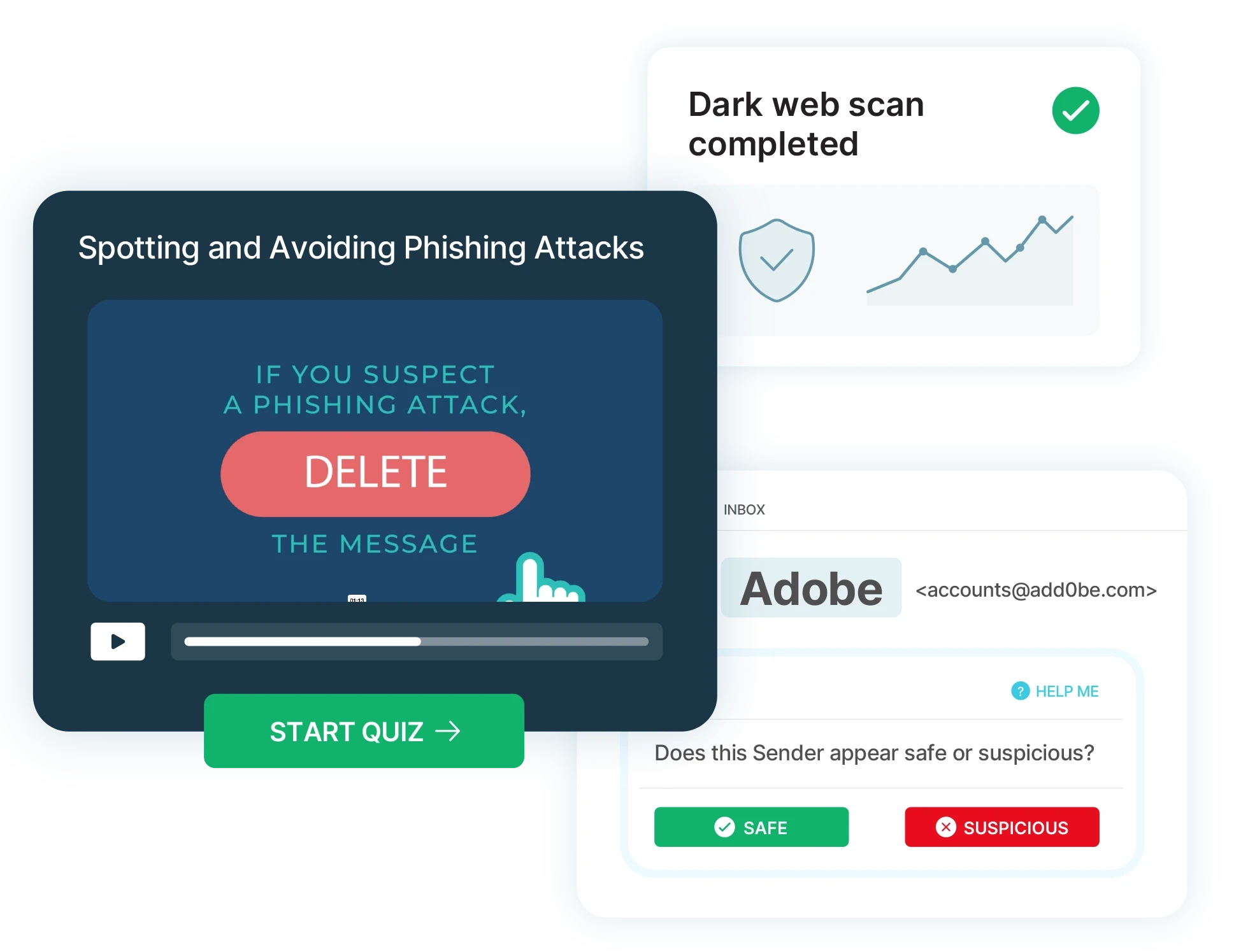
CyberHoot’s positive reinforcement platform pairs short, funny training videos with HootPhish, our patented phishing simulations designed to teach instead of trick. Your team practices the right moves in a setting built on encouragement, and every win gets noticed.
Le, lær og bli kjempeglad!
Why do rewards work better than punishment in security awareness training?
Punishment changes behavior only while people feel watched, the same way drivers slow down for a police cruiser and speed back up once it passes. Rewards give people a reason to choose good habits on their own. When employees see a clear link between finishing training and earning something they value, they keep doing it. Pair the reward with personal benefits, like protecting their own bank accounts and family devices, and the habit lasts after the prize stops feeling new.
How much does a half day off for training compliance cost a business?
A half day equals about four hours out of roughly 2,080 working hours in a year, or about 0.2 percent of an employee’s annual time. For most small and midsize businesses, four hours per person is a modest price for a team with sharper security instincts.
What completion rate should employees reach to qualify for a reward?
Use 80 percent completion for monthly rewards like a free lunch drawing. This bar rewards steady effort and pulls in more employees than a strict 100 percent rule. Save the 95 percent bar for bigger annual rewards, such as a half day off.
Should we name employees who fall behind on cybersecurity training?
No. Public shaming makes people feel helpless and less willing to engage, which defeats the purpose of training. Check in with low performers privately, ask what gets in their way, and offer help with time, format, or technology. A short, friendly conversation often fixes what a stack of reminder emails never did.
Do training rewards work for remote and hybrid teams?
Yes. Swap the in-office lunch for a food delivery gift card, announce winners in your team chat or company email, and share shout-outs during video meetings. An anonymous leaderboard, like the one built into CyberHoot, lets remote employees see how they compare with colleagues without singling anyone out.
What are some low-cost rewards for cybersecurity training completion?
Popular options include a monthly free lunch drawing, a $10 to $25 gift card raffle, an early-out Friday, company swag, a Hoot Hero of the Month title, and a 30-second shout-out at the all-hands meeting. Pick two or three, run them consistently, and rotate them to keep things fresh. Small, frequent rewards beat large, rare ones for building habits.
Oppdag og del de nyeste trendene, tipsene og beste praksisene innen cybersikkerhet – i tillegg til nye trusler du bør se opp for.
Se for deg at du er på motorveien, og kjører omtrent 20 over grensen sammen med resten av trafikken. Brems lenger fremme ...
Les mer
Hva skjer Torsdag 12. november 2026, rundt klokken 11 østlig tid, sluttet Microsoft Outlook å virke...
Les mer
Forfatter: Katie Boquetti | Lederartikkel: Craig Taylor Lederartikkel av Craig Taylor: «Makt har en tendens til å korrumpere,...
Les merFå et skarpere blikk på menneskelige risikoer, med den positive tilnærmingen som slår tradisjonell phishing-testing.